Behind the Scenes at PC2 in Paderborn
May 15, 2026
A visit to PC2 in Paderborn made one thing clear: high-performance computing, energy efficiency, and operational resilience are tightly connected, and even small optimization gains create immediate impact.
I write about this because strong digital infrastructure in Europe deserves more attention. Real progress happens when efficiency, resilience, and practical value are designed together.
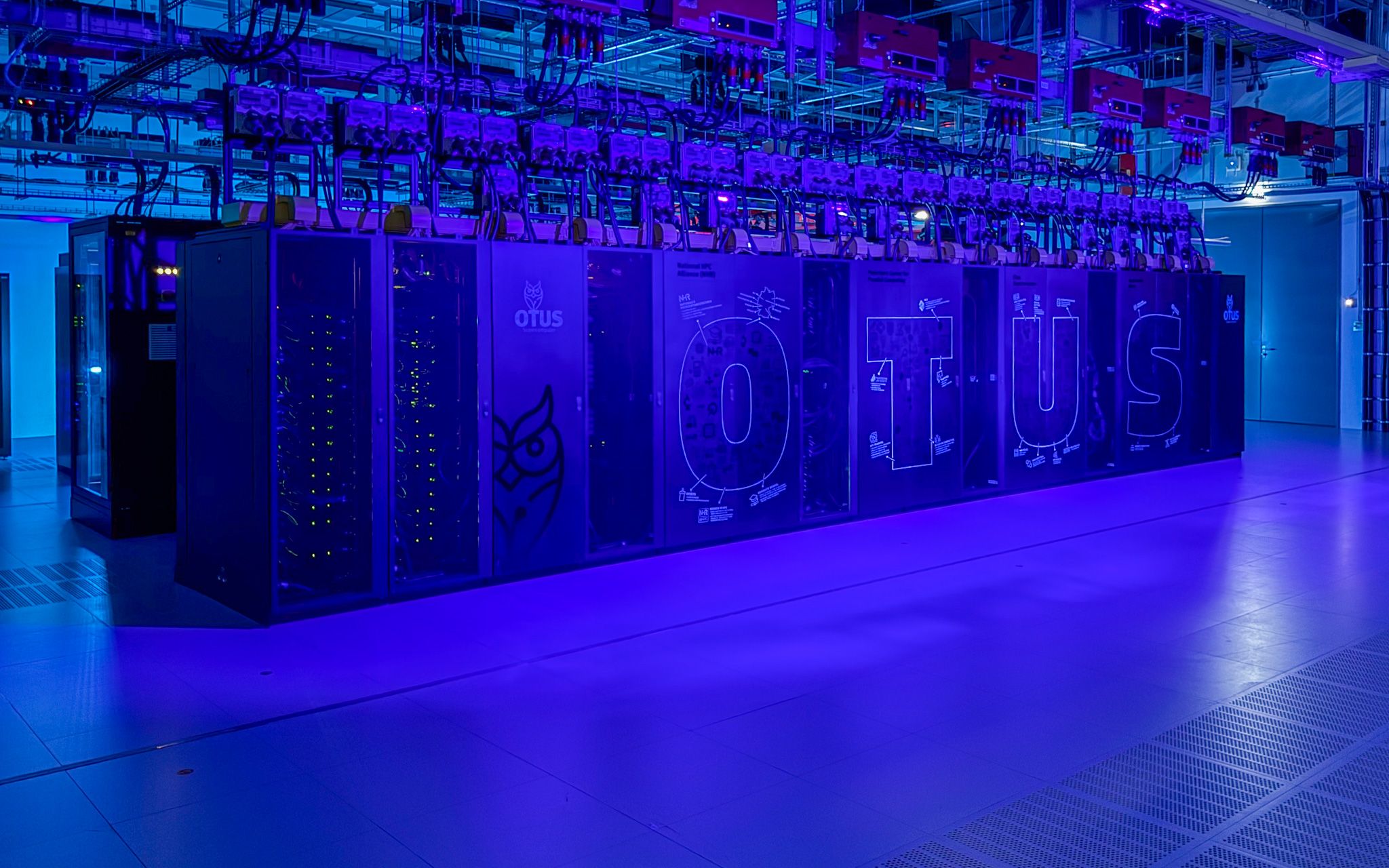
On Tuesday, I had the opportunity to visit PC2 in Paderborn as part of KIHochstift and take a look behind the scenes of the data center. The experience was lasting: technology is not only operated here, it is made tangible.
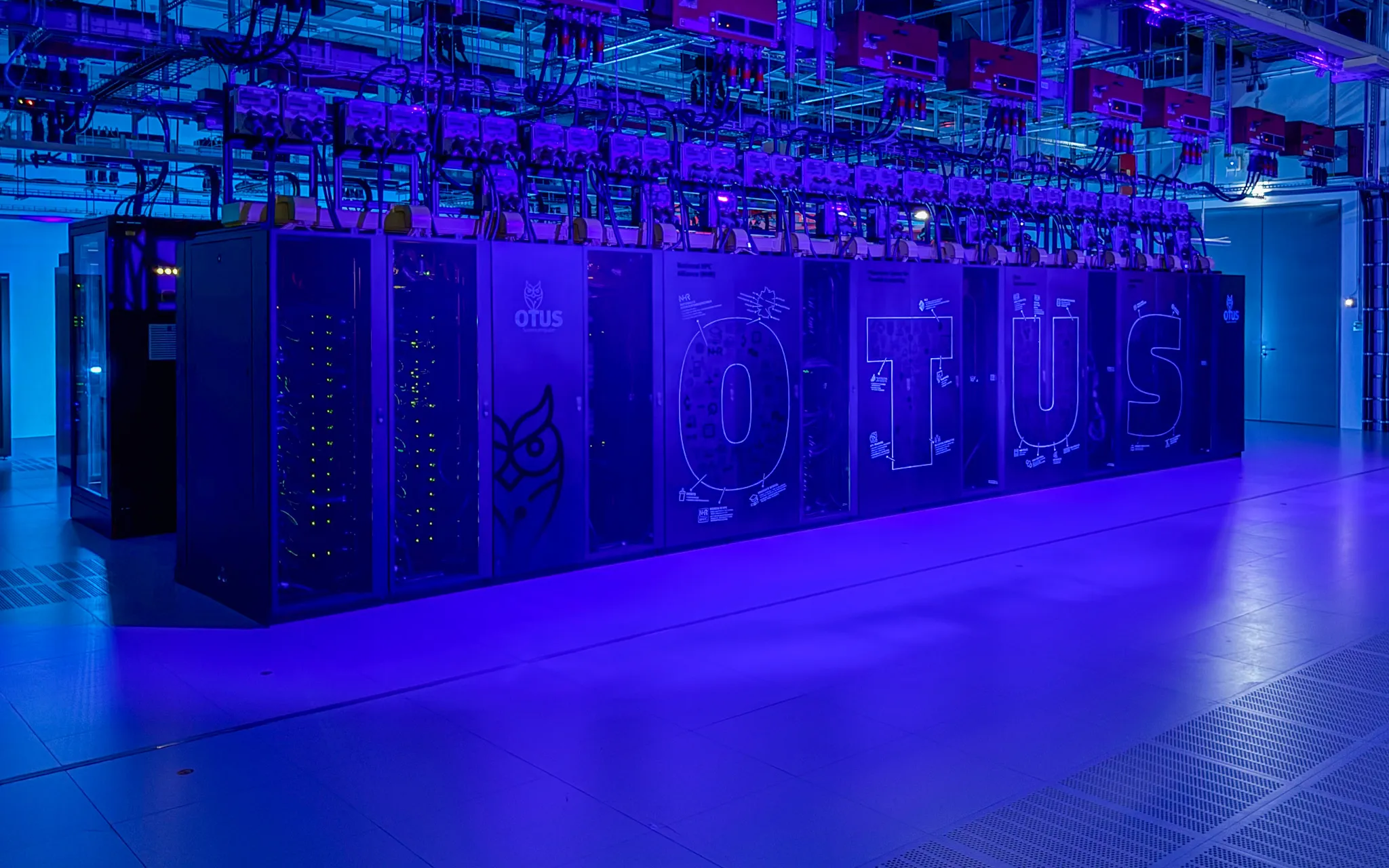
1. First Look into the Cluster
The door opens, and suddenly you are standing in front of the OTUS cluster in a blacklight-staged room. It feels almost surreal, yet very concrete: high-performance infrastructure is not hidden here, it is made visible.
2. Sustainability as an Operational KPI
One key point that stayed with me is PUE (Power Usage Effectiveness), the ratio between total power consumption and actual IT power usage. With a value of around 1.1, the data center is operating at an impressive level.
The scale becomes tangible when looking at energy costs. With around 2 MW of compute power, at EUR 0.30 per kWh, that translates to roughly:
- EUR 600 per hour
- EUR 14,400 per day
- EUR 5.2 million per year
This means that optimizing by just a few percentage points has an immediate, measurable impact. Behind this are highly complex water-cooling systems, finely tuned infrastructure, and continuous optimization in daily operations.
3. Resilience on Another Level
What is often underestimated: running a data center like this is not only complex in terms of performance, but also in resilience. Redundancy, safeguards, and operating processes are tightly interwoven so that disruptions do not simply lead to a standstill.
4. Networking as a Strategic Capability
Just as interesting is how these data centers are connected across multiple layers, from local universities to broader European structures. With initiatives such as JUPITER in Juelich, plus locations in Munich and Stuttgart, a truly distributed ecosystem is taking shape.
My key takeaway: we often talk about hyperscalers in the US. At the same time, high-performance and sustainable infrastructure is also being built here, close to home, and it deserves far more attention.
Many thanks for the tour and the insights.